women plus size sweater flattering usually comes down to three things: proportion, fabric weight, and where the sweater ends on your body.
If you have ever put on a “cute” sweater that instantly looks boxy, pulls at the bust, or clings in the wrong spots, you are not alone, sweaters are deceptively tricky. Knit fabric can either skim beautifully or highlight every line, depending on the details.
This guide focuses on practical choices you can make fast, necklines, hems, knit types, and easy outfit formulas, so you spend less time guessing and more time wearing the pieces you already like.
What actually makes a plus size sweater look flattering
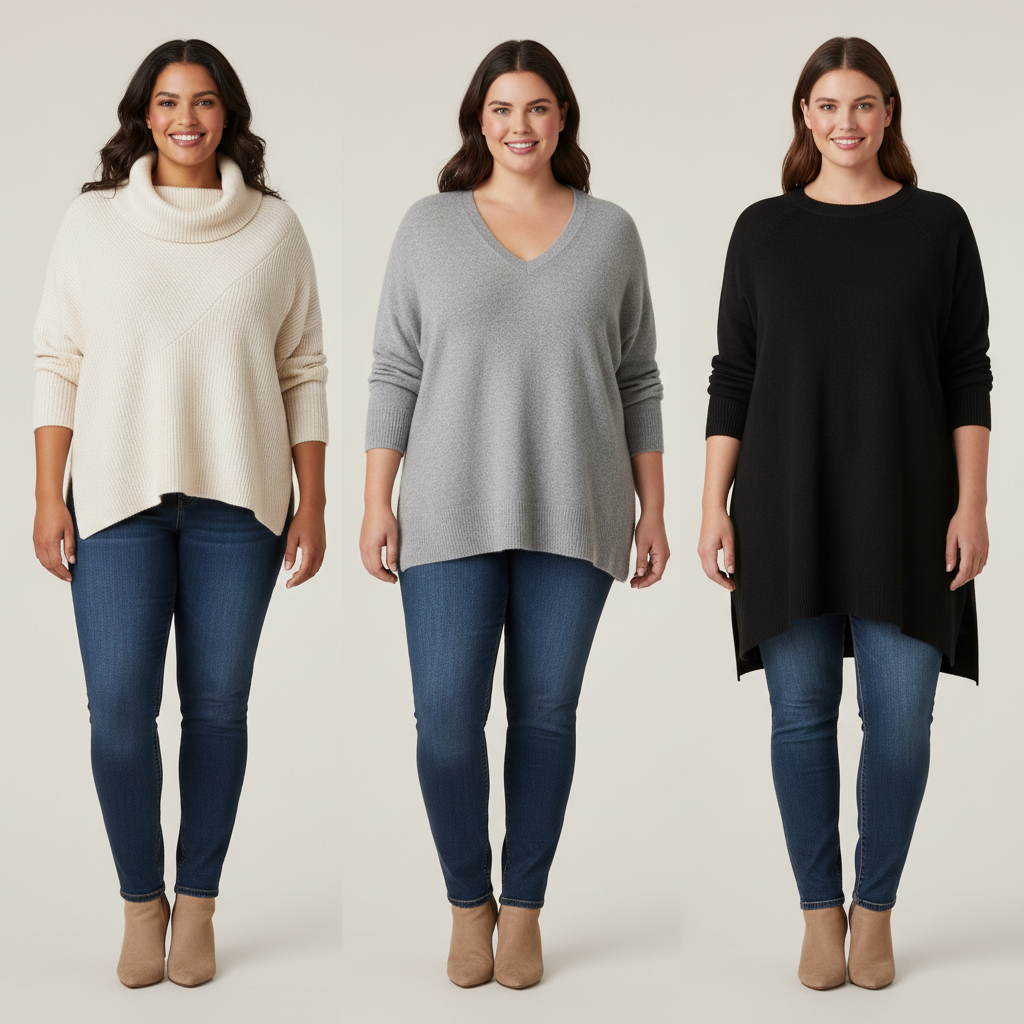
Most flattering sweaters create a clean vertical line, define one “anchor” point (neckline, waist, or wrist), and avoid bunching where you do not want extra volume.
- Neckline choice: V-necks and open crews often elongate the chest area, while tight turtlenecks can feel bulky unless the knit is thin and drapey.
- Shoulder fit: A shoulder seam close to your actual shoulder keeps the top half structured, dropped shoulders can look relaxed, but can also add width.
- Hem placement: The hem matters more than most people expect, it changes leg length and the “center” of the outfit.
- Fabric behavior: A knit can be soft yet still heavy, or light yet clingy, the stitch and fiber blend decide that.
According to FTC (Federal Trade Commission), apparel labels must disclose fiber content, which is useful because you can quickly avoid fibers that usually itch, overheat, or stretch out in your climate and routine.
Common reasons a sweater feels unflattering (and how to spot them)
Before buying another item, it helps to name what is going wrong. In real closets, it is usually one of these.
1) It is the wrong knit weight for the silhouette
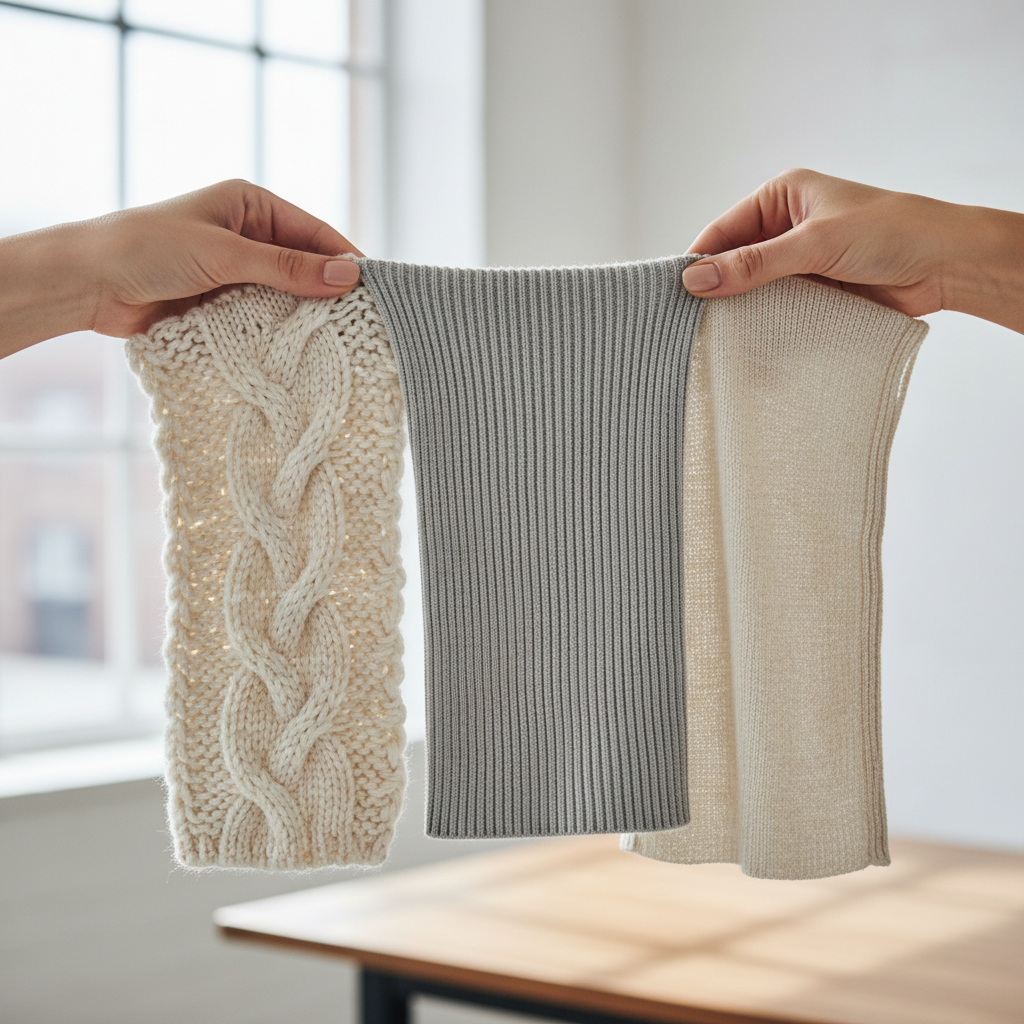
Chunky cable knits look cozy, but they add visual volume. If you want a smoother line, a medium gauge knit with a tighter stitch often reads more polished.
2) The bust area pulls or distorts the pattern
If the knit stretches horizontally across the chest, it can widen the whole look, even if the size “technically” fits. A little ease, or a knit with better recovery, makes a big difference.
3) The sweater ends at the widest point
Hems that land exactly at the fullest part of the belly or hip tend to highlight that spot, moving the hem slightly up or down often fixes the issue immediately.
4) Sleeves are too long or too wide
Extra sleeve fabric can drag the eye downward and make the sweater feel sloppy. A cuff, a bracelet sleeve, or a simple push-up with a bit of structure usually looks cleaner.
Quick self-check: find your best sweater features in 2 minutes
This is not about rules, it is about knowing what usually flatters you so shopping becomes faster.
- If you want the torso to look longer: try V-neck, long cardigan lines, or a vertical rib knit.
- If you want more waist definition: look for a half-tuck friendly hem, a beltable cardigan, or a sweater with ribbing that starts higher.
- If your arms feel like the focus: choose sleeve shapes with a cuff and a slightly tapered forearm, avoid very wide balloon sleeves in stiff yarns.
- If you run warm: prioritize cotton blends, merino, or lighter gauge knits, and avoid very high acrylic content if you tend to overheat.
- If you hate cling: look for thicker yarns with good drape, avoid very thin jersey-style knits unless layered.
Write down two “musts” (example: V-neck + cuffed sleeve) and one “no thanks” (example: hem at high hip). Those three notes alone can save a lot of returns.
Best sweater styles that tend to flatter plus size bodies
These categories work well for many people, but the details still matter, especially hem length and knit density. Use them as a starting point.
| Style | Why it can flatter | Look for |
|---|---|---|
| V-neck pullover | Creates a vertical line, opens the chest area | Medium knit, not too deep V, shoulder seams aligned |
| Rib-knit sweater | Visually streamlines, often holds shape well | Rib that does not overstretch, smoother under layers |
| Wrap or faux-wrap sweater | Suggests waist definition without tightness | Secure wrap, enough coverage at bust, soft drape |
| Longline cardigan | Lengthens the outfit, easy layering | Open front, side slits, light-to-medium weight |
| Tunic sweater (done right) | Comfortable coverage, balances leggings | Side slits, shaped hem, not overly chunky |
If your goal is a women plus size sweater flattering for work or video calls, rib knits and structured crews often read crisp without trying too hard.
How to style a sweater so it looks intentional (not “just cozy”)
Even a great sweater can fall flat if the outfit has no structure. Small tweaks usually solve it.
Outfit formulas that work in real life
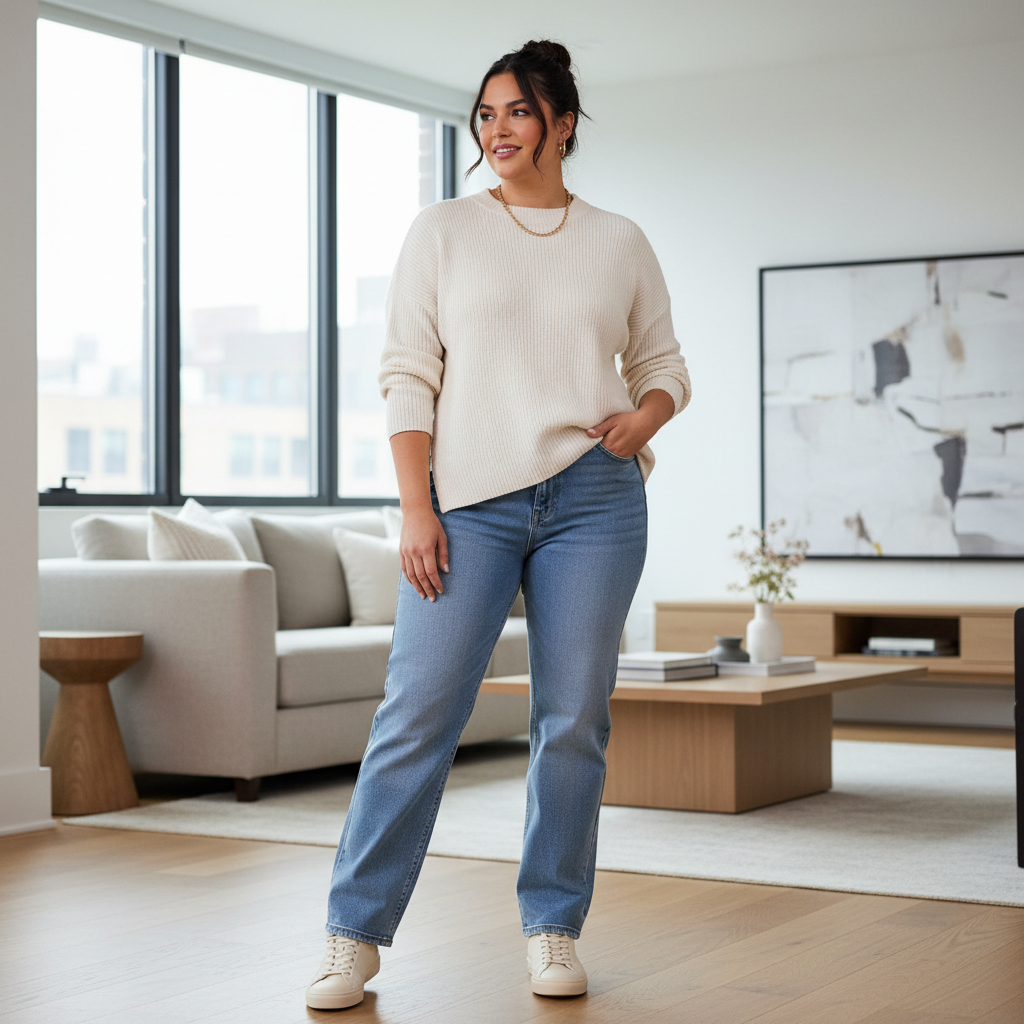
- Half-tuck + straight jeans: half-tuck the front, let the back skim, add a belt if you like definition.
- Monochrome base + contrasting cardigan: same-color top and pants, cardigan on top, the vertical line does a lot of work.
- Sweater + midi skirt: choose a slimmer sweater, or tuck lightly, so the skirt shape stays clean.
- Layered collar peek: button-down or crisp tee underneath, the neckline becomes the “anchor.”
Fast fit tweaks that change everything
- Push sleeves to bracelet length to show wrists, it adds lightness.
- Add a long pendant or scarf for a vertical line, but keep it simple if the knit has texture.
- Try a front-only belt over a cardigan if you want shape without committing to a full wrap.
Shopping checklist: how to choose the right sweater online
Online shopping is where “looks flattering” can turn into “why is this so stiff” fast. This checklist keeps you grounded.
- Check fiber content: cotton, merino, and modal blends often drape well, high acrylic blends can be fine but may pill or feel warmer, depending on quality.
- Read the knit description: look for words like “fine gauge,” “rib,” “substantial,” “drape,” and avoid “stiff” feedback in reviews if you want flow.
- Look at the hem in model photos: where does it land, high hip, mid hip, lower hip, upper thigh.
- Scan review notes for bust and arms: people mention pulling, tight upper arms, or neck stretching more than you might expect.
- Know your shoulder width: shoulder fit drives polish, and it is harder to tailor than length.
If you are building a small capsule, start with one sweater you can dress up and one you can live in, both can still be a women plus size sweater flattering choice when fabric and hem are right.
Common mistakes to avoid (they waste money)
These are the traps that show up in returns and donation bags.
- Buying oversized when you really want drape: oversized can work, but drape comes from yarn and cut, not just sizing up.
- Ignoring side slits and seams: side slits often stop pulling at the hips, seams give shape even in relaxed fits.
- Going too chunky for layering: a bulky sweater under a coat can feel tight and look lumpy, a medium knit often layers better.
- Assuming “longer is always slimmer”: long can elongate, but if it hits the widest point and clings, it can do the opposite.
When it makes sense to ask for help
If sweaters consistently feel itchy, trigger skin irritation, or you suspect fiber sensitivities, it may be worth asking a dermatologist or qualified professional for guidance, especially if reactions persist.
For fit, a tailor can be surprisingly helpful with sleeve length, side seams, or adding small vents. If the sweater is inexpensive, tailoring may not make financial sense, but for a favorite piece it can be the difference between “never worn” and “weekly.”
Conclusion: a flattering sweater is mostly about fit signals, not your body
Finding a women plus size sweater flattering option gets easier once you focus on repeatable signals: shoulder placement, knit weight, hem location, and one intentional styling move like a half-tuck or bracelet sleeve.
If you do one thing this week, pick your top two flattering features and shop only sweaters that match them. If you do a second thing, take one sweater you already own and adjust the styling, sleeves, hem, and base layer, before deciding it “doesn’t work.”
FAQ
What sweater neckline is most flattering for plus size?
Many people like V-neck and open crew necklines because they create space at the chest and a longer visual line, but if you love turtlenecks, choose a thinner knit and a slightly looser neck so it does not add bulk.
Are oversized sweaters flattering on plus size bodies?
They can be, but oversized works best when there is structure somewhere else, like a cuffed sleeve, a cleaner shoulder line, or a defined bottom silhouette such as straight jeans or leggings with a sharper shoe.
How do I stop a sweater from clinging to my stomach?
Try a heavier or more substantial knit, look for side slits, and avoid very thin fine knits without lining. A smoother base layer can also help the sweater skim instead of grabbing.
What length sweater looks best with leggings?
Many prefer a hem that reaches lower hip or upper thigh with leggings, ideally with side slits so it does not pull. If you feel boxy, try a slightly shorter front hem and longer back hem.
What materials are best for a soft, flattering sweater?
Merino wool, cotton blends, and modal blends are common picks for softness and drape, but comfort varies by person. If you are sensitive, start with small wear tests and follow care instructions closely.
How often should I replace sweaters that pill?
Pilling is common with many knits and does not always mean low quality, it often comes from friction. A fabric shaver can extend wear, and storing sweaters folded instead of hanging may help them keep shape longer.
How can I make a plus size sweater look more professional for work?
Choose a medium gauge knit in a solid color, keep the shoulder fit clean, then add one “polish” item like a collared shirt underneath, a blazer, or structured pants. It reads intentional with minimal effort.
If you are trying to build a small rotation of sweaters that feel good and photograph well, it may help to list your top two non-negotiables (neckline, hem, fiber, sleeve) and shop with those in hand, it keeps you from buying almost-right pieces that never become favorites.