
men trench coat waterproof stylish sounds like a simple ask, but in real shopping it’s usually a tug-of-war between staying dry, looking sharp, and not overheating on the commute.
If you’ve ever bought a “waterproof” coat that still soaked through at the shoulders, or a sleek trench that felt like wearing a plastic bag, you already know the gap between marketing and real-life wear.
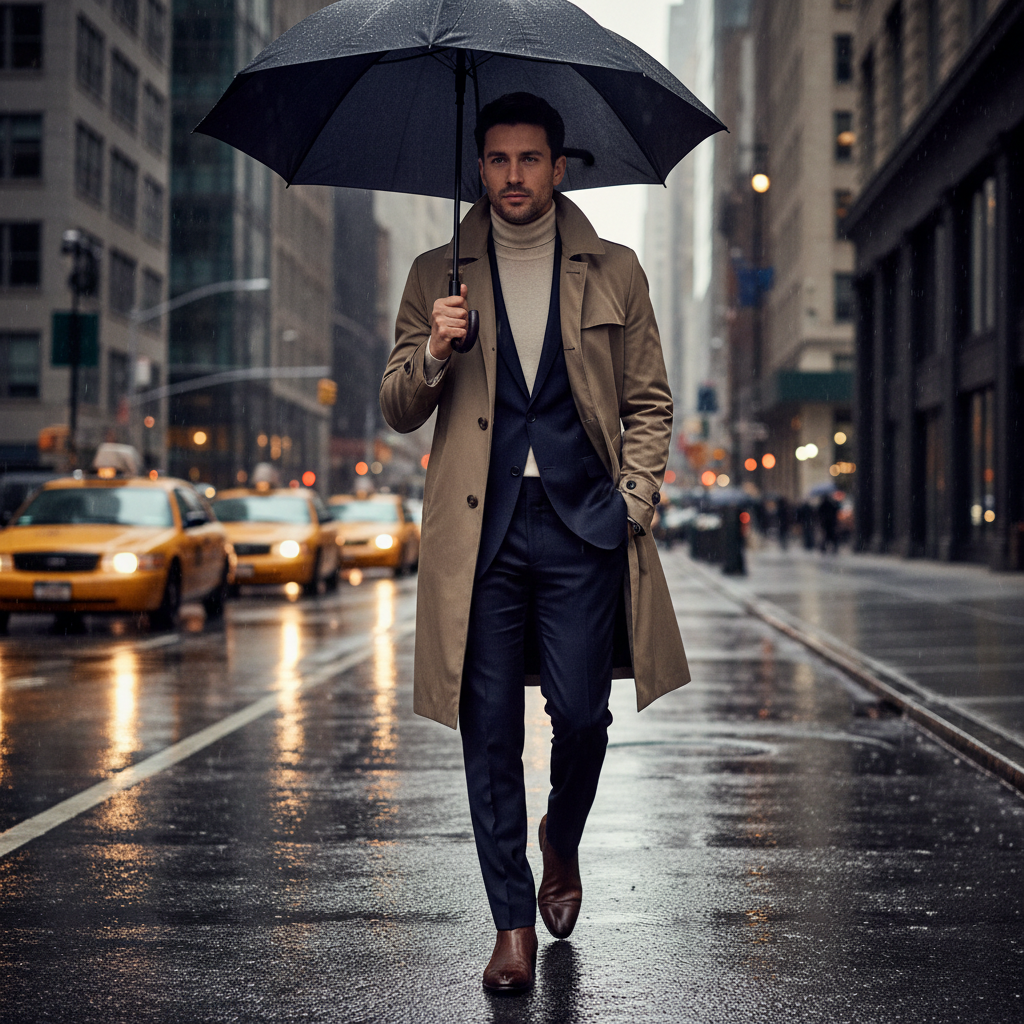
This guide breaks down what actually matters: materials that block rain without feeling clammy, details that separate “looks good online” from “works in weather,” and how to pick a trench that fits your day-to-day, not just your wishlist.
What “Waterproof” Really Means for a Trench Coat
People use “waterproof” as a vibe, brands use it as a label, and you’re stuck guessing. In outerwear, performance usually comes down to construction as much as fabric.
- Waterproof: typically uses a membrane or coating plus seam construction to resist sustained rain.
- Water-resistant: handles light showers, but may wet out in longer exposure.
- DWR finish (durable water repellent): makes water bead on the surface, but can wear off and need reproofing.
According to NOAA, weather conditions can shift quickly, and rainfall intensity varies widely by region and season, so “good enough for drizzle” often becomes “not enough” on a random stormy day.
Why Many Stylish Trenches Fail in the Rain
Most disappointments come from a few predictable design choices that look great on a product page.
- Unsealed seams: water sneaks in through stitching even if the fabric itself seems solid.
- Wrong fabric for the job: some cotton-blend trenches look premium but absorb water and get heavy.
- “Breathable” in name only: coated fabrics can trap humidity, leaving you damp from the inside.
- Collar and cuff gaps: wind-driven rain finds the openings, especially on bike commutes.
Also, fit matters more than people admit. A coat that’s too slim can pull at seams and let water in at stress points, while an oversized trench can funnel water down the sleeves.
Quick Self-Check: What Kind of Trench Do You Actually Need?
Before you compare brands, be honest about your typical week. This decides whether you should prioritize true waterproofing, breathability, or styling versatility.
- Mostly car-to-door: water-resistant + good hood/umbrella coverage often works.
- Transit commuter: lean toward waterproof fabric, higher collar, and longer hem.
- Frequent downpours: look for sealed seams and storm flaps, and avoid absorbent outer shells.
- Warm climate rain: prioritize breathability, lighter lining, and venting so you don’t feel sticky.
- Office + client-facing: cleaner lapels, minimal branding, and a fabric that stays crisp.
If you’re stuck between two categories, default to the one that matches your worst 10% days, not your average day. That’s when you’ll either love the coat or resent it.
Materials and Features That Deliver Both Waterproof and Stylish
To get a men trench coat waterproof stylish enough for daily wear, look for a balance: technical protection, but a silhouette that reads “trench,” not “hiking shell.”
Fabric choices (what to look for)
- Technical laminates (2-layer or 3-layer): often offer better rain protection; 3-layer tends to feel less clammy.
- Coated cotton blends: can look classic, but performance varies; good ones rely on coatings and smart construction.
- Recycled synthetics: common in modern trenches, usually lighter and easier to maintain.
Construction details that matter in real weather
- Taped or sealed seams (especially shoulders, hood/collar, upper back).
- Storm flap: not just decoration, it reduces water push-through at the chest/back yoke.
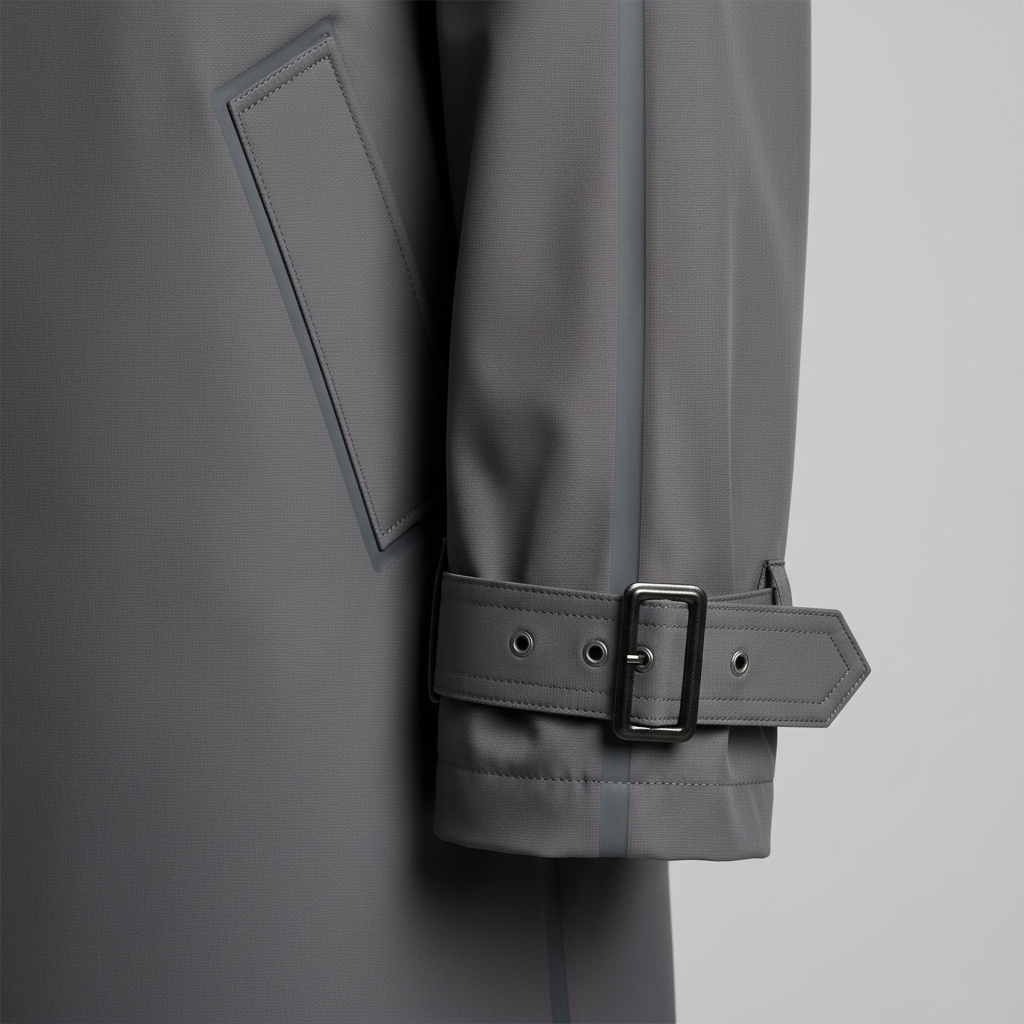
- Adjustable cuffs: helps stop rain running down the wrist, especially while carrying bags.
- Collar that stands or a removable hood: saves your neck and dress shirt collar.
- Two-way zipper (if included): underrated for sitting, driving, and longer strides.
Style-wise, clean hardware and restrained stitching usually age better than heavy buckles and loud contrast details, especially if you plan to wear it to work.
Fit and Styling: How to Keep It Sharp Without Looking Boxy
A trench can look “stylish” on day one and awkward forever if the proportions are off. Here’s what tends to work for most builds, with room for personal taste.
- Length: mid-thigh to just above knee is the easiest to dress up and still practical in rain.
- Shoulders: seams should sit close to your shoulder edge; too wide reads sloppy fast.
- Layer room: you want space for a blazer or light sweater without strain across the back.
- Belt placement: ties at your natural waist, not your hips; it controls shape in wind.
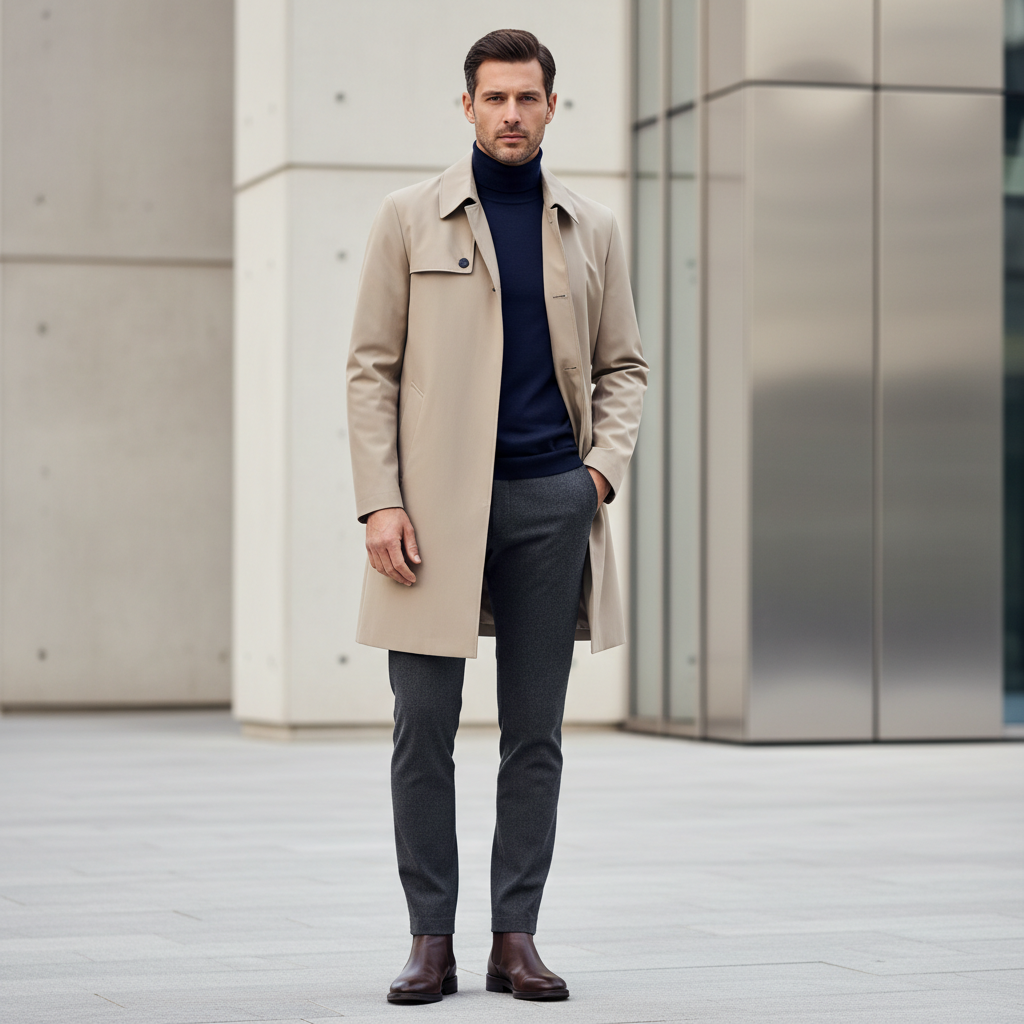
Easy outfits that don’t fight the trench: dark denim + knit, chinos + OCBD, or a suit with a simpler, matte-finish trench. If you want one coat for everything, pick a neutral color first, then add personality via scarf or bag.
Buying Guide Table: Match Your Scenario to the Right Trench
Use this as a quick filter when product descriptions start to blur together.
| Scenario | Best priority | Helpful features | Watch-outs |
|---|---|---|---|
| Daily city commute | Weather protection + clean look | Taped seams, storm flap, stand collar | Stiff fabric that creases badly |
| Business travel | Packability + versatility | Wrinkle-resistant shell, secure pockets | Bulky lining that overheats indoors |
| Warm, rainy climate | Breathability | Vents, lighter build, minimal padding | “Rubbery” coated feel |
| Heavy rain region | True waterproofing | Sealed seams, hood option, longer hem | Fashion-only trenches with no seam sealing |
If you’re choosing between two coats and one feels slightly more “boring,” that’s often the one that integrates best with a real wardrobe. The flashier option can be fun, but it tends to limit outfits.
Care, Reproofing, and Real-World Longevity
Even a strong men trench coat waterproof stylish in the store can degrade fast if you treat it like a sweater. Most performance issues show up after repeated wear, not day one.
- Follow the care label: coatings and membranes can be sensitive to heat and harsh detergents.
- Restore DWR when needed: if water stops beading and the shell “wets out,” reproofing may help.
- Don’t ignore grime: dirt and oils can reduce water repellency and breathability.
- Hang dry with structure: a good hanger helps keep shoulders crisp and avoids wrinkles.
If you have allergies or skin sensitivity, it may be worth choosing milder wash products and checking fabric finishes, and if you’re unsure, asking a professional cleaner can prevent expensive mistakes.
Common Mistakes That Waste Money (and Patience)
- Buying for one photo: a trench needs to work open, closed, belted, and in motion.
- Ignoring pocket design: shallow pockets and weak closures become daily annoyances.
- Assuming “designer” means weatherproof: some fashion trenches prioritize drape over rain resistance.
- Over-layering under a slim trench: you’ll sweat, then blame the coat for “leaking.”
One more subtle one: dark colors can show salt and rain spotting differently than mid-tones. If you hate maintenance, consider fabrics that wipe clean easily.
Key Takeaways and Next Steps
If you want a coat that looks right in the office and holds up on a wet sidewalk, focus on seam construction, fabric feel, and fit under your real layers, not just the word “waterproof” in the listing.
Action step: pick your primary scenario, then shortlist coats that match those features, and only after that choose color and styling details. That order saves time and cuts regret.
FAQ
Is a waterproof trench coat too warm for spring?
It can be, depending on lining and breathability. If you run hot, look for lighter builds, venting, and less insulation, and plan to rely on layering rather than a thick inner lining.
What’s better for style: hood or no hood?
For a cleaner, dressier look, many people prefer no hood or a removable hood. If you walk a lot in rain, a low-profile removable hood is often the most practical compromise.
How do I know if a trench is truly waterproof online?
Look for notes about sealed or taped seams, not just fabric claims. Product photos that show storm flaps, cuff straps, and closures can also hint at real weather intent.
Can I wear a waterproof trench over a suit?
Usually yes, but you’ll want enough room in the shoulders and chest to avoid pulling. A slightly longer hem also helps keep suit pants from getting soaked at the top.
Why does my “waterproof” coat feel wet inside?
Often it’s condensation from trapped body heat, not rain penetrating. Improving ventilation, reducing heavy layers, and choosing more breathable construction can help.
How often should I reapply DWR?
There’s no single schedule; it depends on use and how you clean it. A practical rule is to reproof when water stops beading and the fabric starts to wet out quickly.
Are classic cotton trench coats a bad idea for rain?
Not always, but many classic versions handle light rain better than prolonged downpours. If you’re frequently in heavy rain, technical fabrics and seam sealing tend to be more reliable.
If you’re trying to narrow down a men trench coat waterproof stylish enough for work but tough enough for real weather, it helps to share your city, commute type, and whether you plan to layer over a blazer, then the shortlist becomes much clearer and shopping feels less like gambling.