
Best exfoliator for body dry skin usually means one that removes dull flakes without stripping your barrier, because with dry skin it’s easy to exfoliate “successfully” and still end up itchier than before.
If your legs look ashy no matter how much lotion you apply, or your arms feel bumpy and tight after showering, exfoliation can help—but only when the product type and frequency match what your skin can tolerate.
This guide breaks down what actually causes body dryness, how to pick between scrubs, acids, and gentle enzyme options, and how to build a routine that makes moisturizer work better instead of fighting a losing battle.
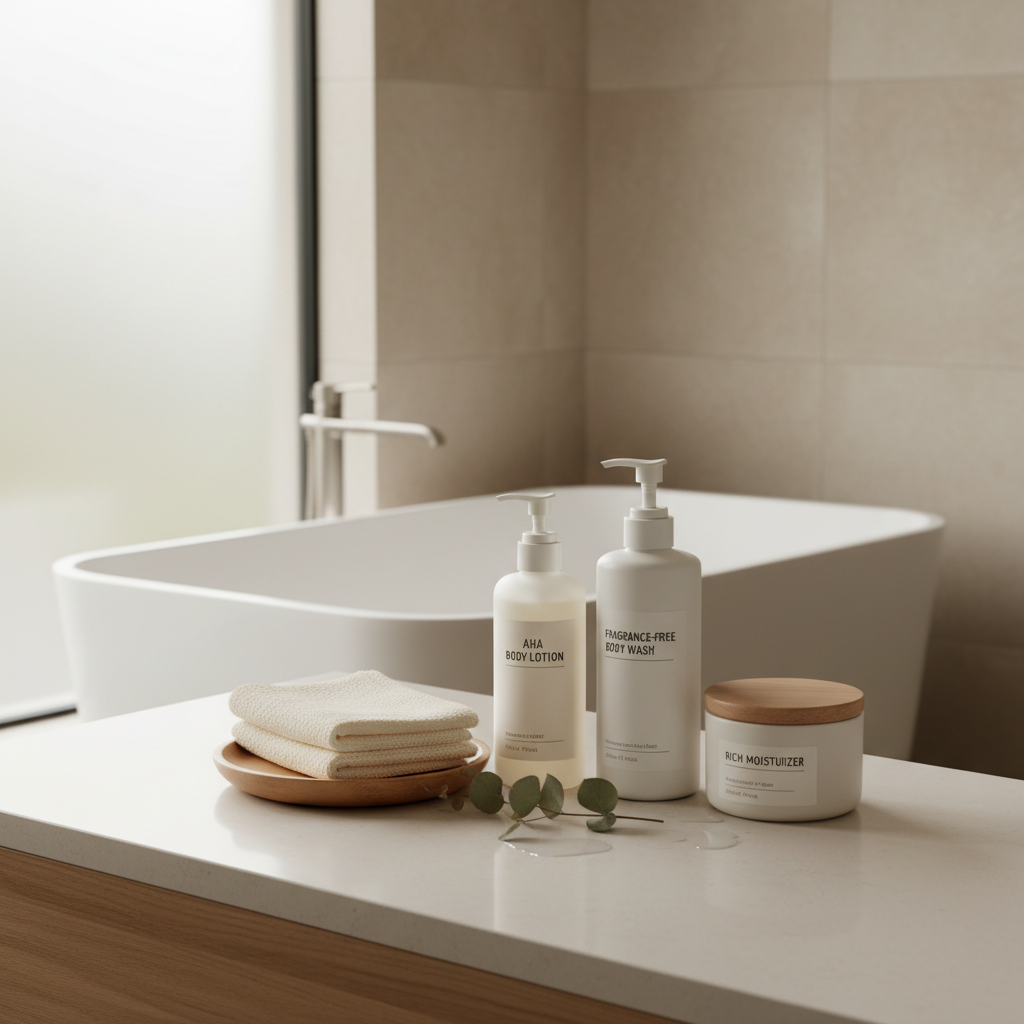
Why body skin gets dry (and why exfoliation sometimes backfires)
Dry body skin usually isn’t just “not enough lotion.” Often it’s a mix of barrier stress, low humidity, and cleansing habits that quietly pull water and lipids out of the outer layer (the stratum corneum).
- Hot showers + strong cleansers can remove the oils that help keep water in. The skin feels clean, then tight.
- Low humidity and indoor heating make water evaporate faster, especially on shins and forearms.
- Friction (rough towels, tight clothes, frequent shaving) can worsen flaking and sensitivity.
- Skin conditions such as eczema or psoriasis may look like “dryness” but behave differently, these often need a more cautious plan.
Exfoliation backfires when it removes flakes but also disrupts the barrier. You’ll feel smooth for a day, then your skin overcompensates with irritation and more visible dryness.
According to the American Academy of Dermatology (AAD)... gentle skin care habits, including avoiding harsh scrubs and hot water, help protect dry, sensitive skin. In practice, that means your exfoliator choice matters as much as your moisturizer.
Quick self-check: which “dry skin” are you dealing with?
Before buying anything, pin down what your skin is telling you. Different patterns respond to different exfoliants.
- Simple flaking + tightness after shower: often barrier dryness; choose gentle chemical exfoliation or very mild physical exfoliation.
- “Strawberry legs” or dark dots after shaving: can be clogged follicles; BHAs (salicylic acid) or gentle AHA blends often help.
- Rough, bumpy upper arms/thighs (KP/keratosis pilaris look): typically responds well to lactic acid, glycolic acid, or urea.
- Itchy patches, redness, cracking: pause exfoliation, focus on barrier repair; consider a dermatologist if persistent.
If you’re unsure, a safe default is a low-strength lactic acid or urea body product used sparingly, then adjust based on how your skin behaves over 2–3 weeks.
Types of exfoliators: what works best for dry body skin
“Best exfoliator” depends on how dry and how reactive your skin is. For many people, gentle chemical exfoliation wins because it’s consistent and less abrasive, but there are exceptions.
Chemical exfoliants (AHA/BHA/PHA)
- AHA (lactic, glycolic): helps lift surface flakes and improve rough texture. Lactic acid tends to feel friendlier for dry skin.
- BHA (salicylic): oil-soluble, better for clogged pores, ingrowns, and “strawberry” texture, can feel drying if overused.
- PHA: larger molecules, usually gentler; nice option if you get stingy reactions from stronger acids.
Many “best exfoliator for body dry skin” picks are actually leave-on lotions with AHA/urea because they exfoliate slowly and pair naturally with moisturizing ingredients.
Physical exfoliants (scrubs, mitts, washcloths)
- Fine, rounded particles (or a soft washcloth) can be fine 1–2x/week.
- Harsh scrubs (sharp shells, aggressive gloves) often create micro-irritation, especially on shins and chest.
If you love the “polished” feel of a scrub, keep it gentle and let your moisturizer do the heavy lifting afterward.
Urea is a special case (not just exfoliation)
Urea can act as a humectant and a softening keratolytic depending on concentration. For body dryness with rough patches, urea-based creams often feel more comfortable than strong acids.
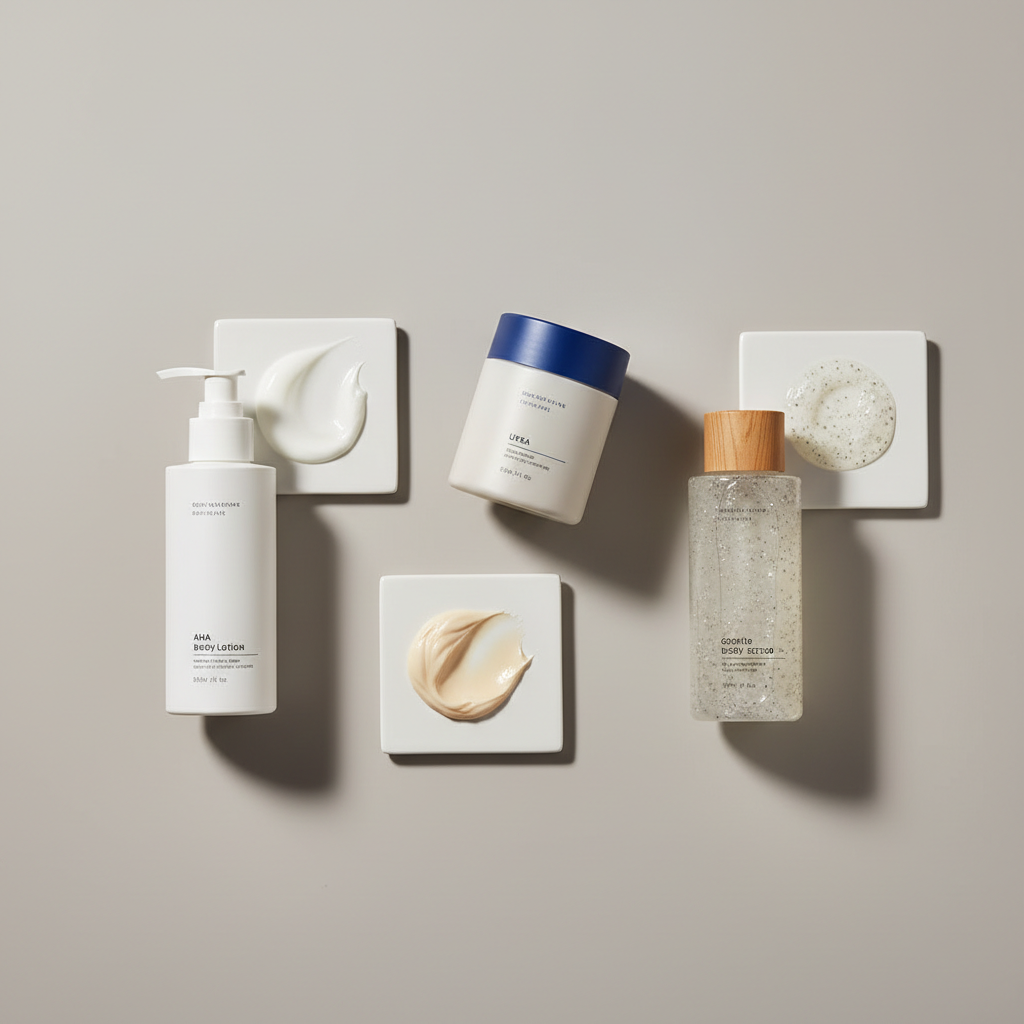
What to look for on the label (and what to avoid)
For dry body skin, the label details matter more than the hype words. You want exfoliation plus barrier support in the same routine.
- Look for: lactic acid, PHA, low-to-moderate glycolic acid, salicylic acid (if bumps/ingrowns), urea, ceramides, glycerin, petrolatum, colloidal oatmeal.
- Be cautious with: high alcohol content, heavy fragrance, strong essential oils, “extra strength” acids if you’re new, and scrubs that feel sharp.
Texture also matters. A leave-on cream or lotion usually works better than an in-shower rinse-off exfoliant when you’re chasing comfort, not just smoothness.
Choosing the best exfoliator for body dry skin: a practical table
Use this as a quick matchmaker. It’s not about one universal winner, it’s about best fit.
| Skin situation | Exfoliator type that often works | How often to start | Extra tip |
|---|---|---|---|
| Flaky, tight skin after shower | Low-strength AHA (lactic) or PHA lotion | 2 nights/week | Apply to slightly damp skin, then seal with moisturizer |
| Rough patches (elbows, knees, shins) | Urea cream or AHA + ceramides | 3 nights/week | Don’t scrub first, let the product do the work |
| KP-like bumps (upper arms/thighs) | Lactic acid or glycolic body lotion | 2–3 nights/week | Consistency beats strength, judge after 3–4 weeks |
| Ingrowns or “strawberry legs” | BHA (salicylic) wash or leave-on | 1–2 nights/week | Space away from shaving days if you sting easily |
| Sensitive, easily stinging dry skin | PHA or very gentle washcloth exfoliation | 1 night/week | Patch test, keep showers lukewarm |
How to exfoliate dry body skin without making it worse (step-by-step)
Best exfoliator for body dry skin only performs when the routine around it supports recovery. Here’s a simple approach that tends to work in real life.
1) Pick one exfoliation lane for two weeks
- If you choose an AHA/PHA lotion, skip scrubs and exfoliating gloves.
- If you choose a scrub, skip acids those same days.
Mixing methods is how many people accidentally overdo it while thinking they’re being “thorough.”
2) Use less product than you think
A thin, even layer is enough for leave-on acids. With dry skin, more product can mean more sting, not more results.
3) Moisturize like it’s part of exfoliation (because it is)
- Apply a rich moisturizer within a few minutes after showering.
- On exfoliation nights, consider “sandwiching”: moisturizer first on sensitive zones, then exfoliant, then another light layer of moisturizer.
According to the National Eczema Association... moisturizing consistently helps support the skin barrier, and timing it after bathing can reduce dryness. Even if you don’t have eczema, the logic holds.
4) Adjust frequency based on feel, not on the label
If you notice burning, shiny tightness, or increased itching, scale back. A comfortable routine done weekly can beat an aggressive routine done twice and abandoned.
Common mistakes that keep dry skin rough
- Exfoliating every shower: dry skin often needs rest days.
- Chasing squeaky-clean: that tight feeling is a warning sign for many people.
- Using acids right after shaving: higher chance of sting and irritation, especially with glycolic or salicylic products.
- Forgetting sunscreen: exfoliants can increase sun sensitivity; body SPF matters on exposed areas.
- Assuming flakes always mean “needs more exfoliation”: sometimes it means “barrier is compromised.”
If you’re stuck in the cycle of scrub → smooth → sting → peel, pause exfoliation for a week and rebuild with bland moisture first.
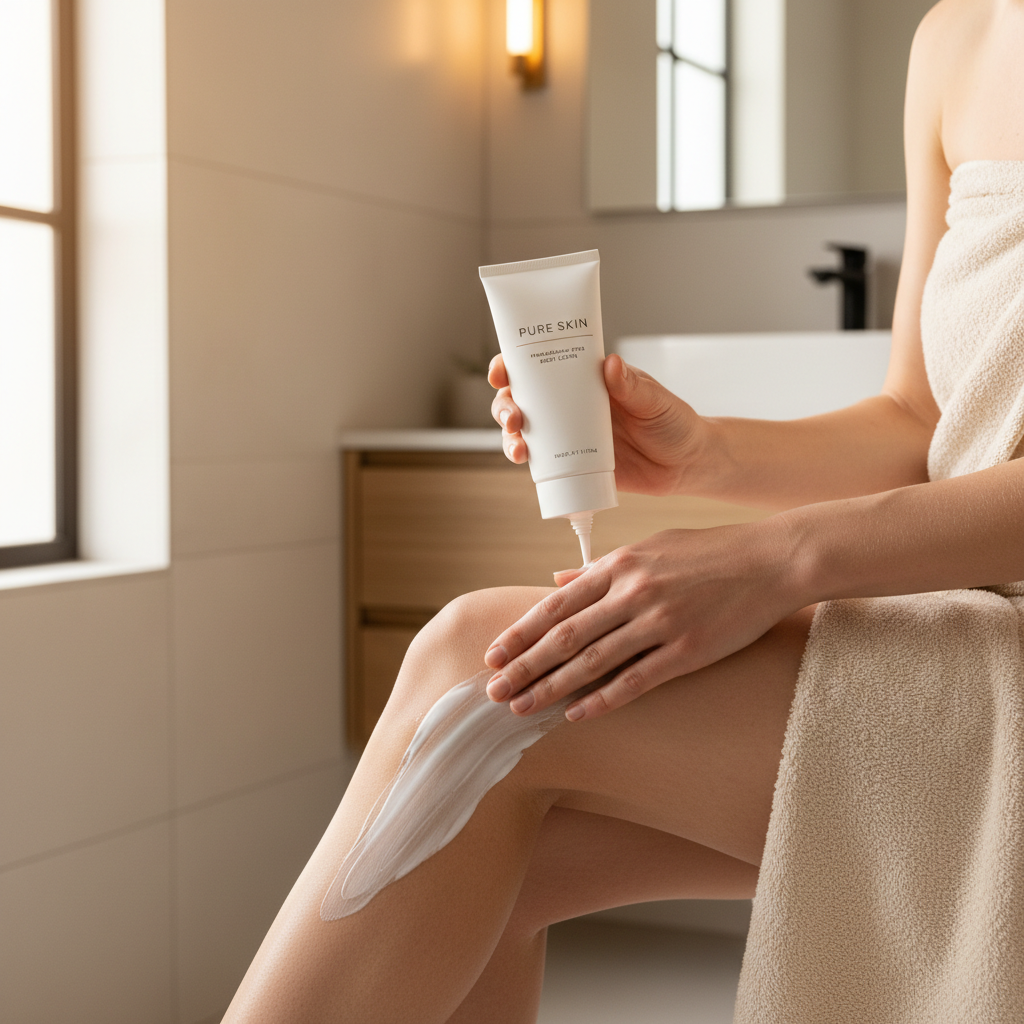
When to get professional help (and when to pause)
Stop exfoliating and consider professional guidance if you see cracking, oozing, significant redness, or intense itch that doesn’t improve with gentle care. These can overlap with eczema, psoriasis, contact dermatitis, or infection, and self-treating with stronger exfoliants may worsen symptoms.
If you’re pregnant, on prescription retinoids, using topical steroids, or have a history of severe reactions, it’s smart to ask a dermatologist which active ingredients fit your situation.
Key takeaways (so you can buy and use with confidence)
- Dry skin needs gentle exfoliation plus barrier support, not maximum intensity.
- Lactic acid, PHA, and urea often suit body dryness better than harsh scrubs.
- Start low and slow, then increase only if skin stays comfortable.
- Moisturizing right after bathing can make exfoliation work better and feel calmer.
Conclusion: the “best” option is the one you can use consistently without burning or rebound flaking. Pick one approach, run it for two weeks, and let comfort be the deciding metric.
If you want a simple next step, choose a gentle leave-on exfoliating body lotion for dry skin, use it 2 nights per week, and pair it with a fragrance-free moisturizer the other nights—then reassess texture and itch level after about a month.