Best belts for women jeans come down to three things most people overlook in the fitting room: your jean rise, your belt loop width, and the buckle size you can actually live with day to day. Get those right, and a belt stops feeling like an afterthought and starts making jeans sit cleaner at the waist.
If you have a drawer of “almost” belts, you already know the pain points: holes never land where you need them, the buckle feels bulky under a tucked tee, the belt slides through loops, or the faux leather cracks fast. A good belt fixes fit and finishes an outfit, but only if it matches how your jeans are built.
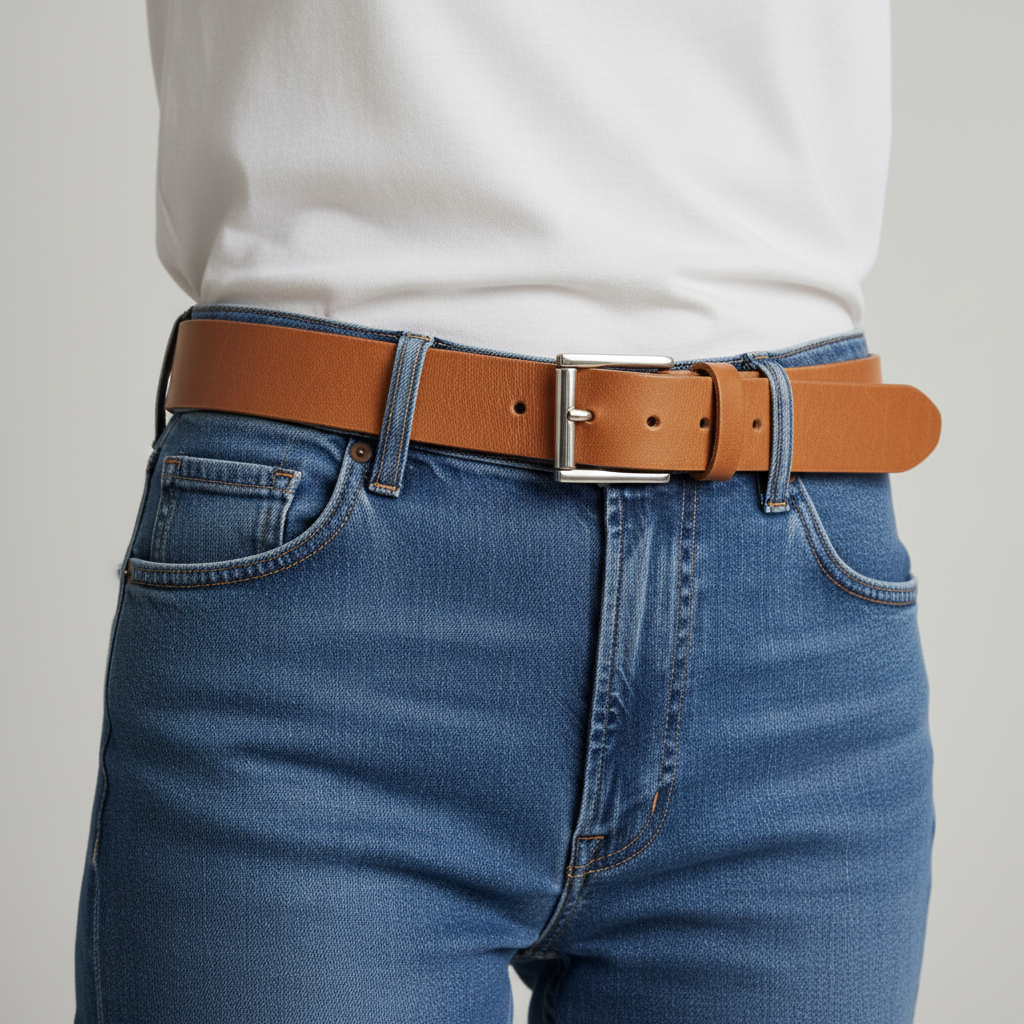
This guide is built to help you choose confidently in 2026: which belt widths work with common women’s jeans, which materials hold up, which buckle styles flatter (and don’t dig in), plus quick checks you can do at home before buying your next one.
What makes a belt “best” for women’s jeans in 2026
Trends shift, but jeans construction stays fairly consistent, belt loops, rises, and waistbands still dictate what works. In 2026, the belts that earn repeat wear usually share a few practical traits.
- Correct width for your loops: Most women’s jeans accept 1.25" to 1.5" belts. Too narrow looks flimsy, too wide bunches or won’t thread easily.
- Stiffness that matches the job: A belt meant to hold up high-rise denim should feel more structured than one meant to accessorize slouchy wide-leg jeans.
- Hardware that fits your lifestyle: Oversized buckles look cool, but they can press under a desk edge, seatbelt, or when you sit for long stretches.
- Hole spacing that actually fits: Many belts use 1" spacing; some use 0.75" which can feel more forgiving.
According to ASTM International, leather terminology can be inconsistent across products and categories, so shoppers often do better focusing on observable construction details (edge finishing, thickness, lining, stitching) rather than relying on a single label.
Material choices: leather, vegan leather, suede, and webbing
Material is where “looks great online” can turn into “why is it peeling already.” The best belts for women jeans often start with a material that matches how hard you wear denim.
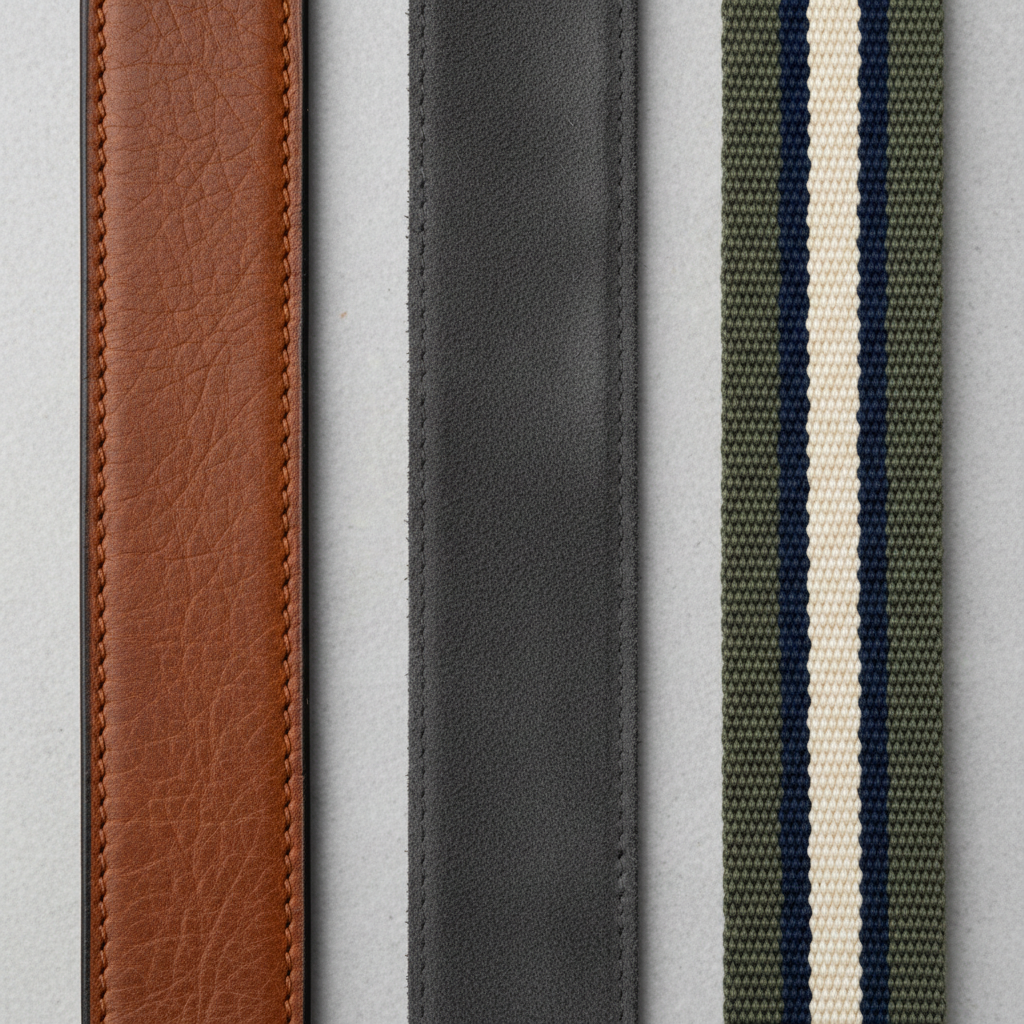
Real leather (full-grain, top-grain, split)
- Full-grain: Often ages well and resists surface cracking, usually higher cost.
- Top-grain: Common and often durable, surface may be corrected for uniformity.
- Split/bonded: Can look fine at first, but many versions show wear faster, especially at the buckle fold.
If you want one “wear it with everything” piece, a medium-width leather belt in black or brown is the safest bet, provided the edges are sealed cleanly and the buckle attachment feels solid.
Vegan leather (PU, plant-based blends)
Vegan options vary a lot by finish and backing. Many PU belts look polished, but the stress points are predictable: the fold near the buckle and the hole area. If you go this route, prioritize thicker straps, reinforced hole zones, and a return policy you trust.
Suede
Suede reads soft and elevated with denim, especially for casual outfits. The tradeoff is maintenance: it can pick up marks and darken where it rubs belt loops. For everyday jeans, suede often works better as a style belt than a “hold-up-your-waistband” belt.
Webbing and stretch
Webbing belts are underrated for comfort, travel, and long days sitting. They also pair well with relaxed jeans. Look for sturdy buckles and tight weave; loosely woven webbing can curl at the edges over time.
Width and buckle: the sizing details that change everything
Most belt regret is sizing regret. Not length, but proportions, width against loops, buckle size against your torso, and where the belt sits on high-rise versus low-rise jeans.
- 1.25" (about 32mm): Works for many women’s jeans, especially if loops are narrower or you want a cleaner, slightly dressier look.
- 1.5" (about 38mm): Classic “jeans belt” width, often looks balanced with straight and bootcut denim.
- 1.75"+: Usually too wide for many women’s belt loops unless the jeans are designed with wider loops.
Buckle shape matters too. A medium oval or rounded rectangle tends to feel less pokey than sharp corners, while a large statement buckle can be fun but sometimes fights with a tucked shirt, front button, or a bag strap hitting the same area.
Quick self-check: pick the right belt for your jeans in 2 minutes
If you want best belts for women jeans that you’ll actually wear, do these checks before you buy, or at least before you remove tags.
- Loop test: Thread the belt through two loops only. If it snags or folds, it’s probably too wide or too stiff for those jeans.
- Sit test: Sit down and lean forward slightly. If the buckle digs, try a smaller buckle or a flatter profile.
- Hole placement: Your ideal fit should land near the middle holes, not the last one. That gives room for day-to-day fluctuation.
- Waistband behavior: If your jeans gap at the back, a belt helps, but extreme gapping may mean the jean fit is off in the hip-to-waist ratio.
- Outfit friction: If you wear knits often, check if hardware catches fabric or if the belt edge feels rough.
Recommended belt styles by jean type (and what to avoid)
Instead of hunting for one mythical “perfect” belt, it’s more realistic to build a small lineup. Here’s what usually works with common denim silhouettes.
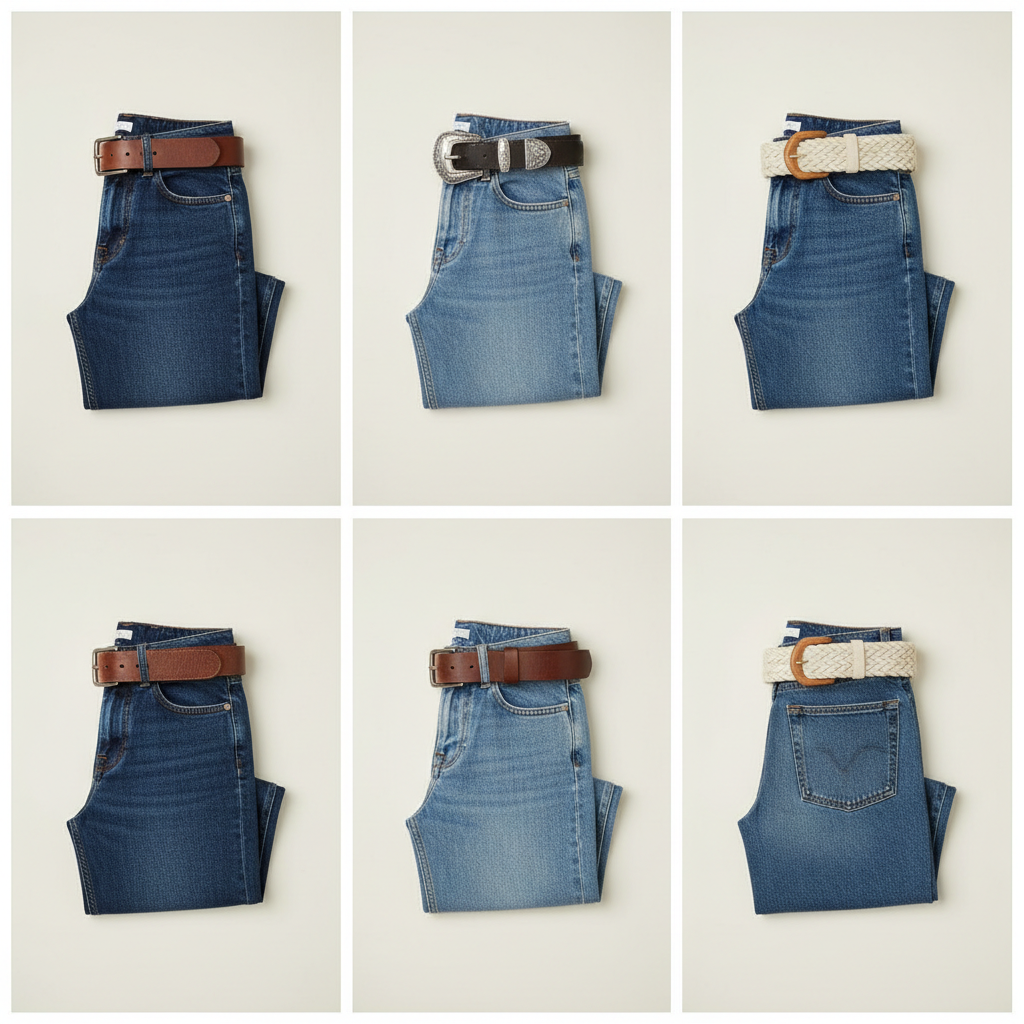
High-rise jeans
- Works: 1.25"–1.5" structured leather, minimal buckle, tapered tip.
- Avoid: Very bulky buckles if you sit a lot, ultra-thin belts that twist and “rope” through loops.
Mid-rise straight-leg
- Works: Classic 1.5" jeans belt, western-inspired buckle in moderate size, subtle grain leather.
- Avoid: Too glossy finishes if you want an everyday casual look, they can read dressy fast.
Low-rise (and slouchy fits)
- Works: Slightly longer belts, softer leather, webbing, or braided styles that flex.
- Avoid: Super stiff belts that “float” off the waistband and create weird angles.
Wide-leg and baggy jeans
- Works: Medium buckle, braided leather, suede for texture, or a clean clamp buckle web belt.
- Avoid: Tiny buckles that disappear visually, unless you specifically want a quiet look.
Skinny and slim jeans
- Works: 1.25" belts, sleek buckles, smoother leather, reversible belts if you want versatility.
- Avoid: Oversized buckles that overpower the silhouette.
Buying guide table: choose your belt based on priorities
If you’re deciding between a few options, this quick table helps you pick based on how you wear jeans, not just how the belt looks in a product photo.
| Priority | What to look for | Usually a good match | Potential downside |
|---|---|---|---|
| All-day comfort | Flat buckle, slightly flexible strap | Webbing, braided leather | May feel less “polished” |
| Holds waistband firmly | Structured leather, sturdy keeper | 1.5" leather jeans belt | Can feel stiff at first |
| Minimalist style | Clean edges, simple hardware | 1.25" smooth leather belt | Shows scratches more easily |
| Trend-forward look | Statement buckle, texture | Western buckle, suede | Less versatile across outfits |
| Better adjustability | Closer hole spacing or ratchet track | Ratchet belts, braided belts | Some ratchet tracks feel bulky |
Practical steps: how to get the right size and make it last
Even the best belts for women jeans won’t feel right if sizing is off. A few small habits also make belts last longer, especially at the fold and hole area.
How to choose belt length
- Use your pant size as a starting point, but confirm with the brand’s size chart since belt sizing is not consistent.
- When buckled, aim for the strap end to land around the first belt loop after the buckle or slightly past it.
- If you’re between sizes and wear high-rise jeans often, sizing up can feel more comfortable, but don’t rely on the last hole.
How to break in a stiff leather belt (without wrecking it)
- Wear it around the house for short blocks of time rather than forcing a sharp bend.
- Store it hanging or rolled loosely; tight coils can create permanent waves.
- If leather feels dry, use a small amount of leather conditioner, and patch-test first. According to The American Leather Chemists Association, leather care outcomes can vary by tanning and finish, so gentle, minimal product use is typically safer than over-conditioning.
Keep the holes from stretching
- Don’t yank the strap tight every time. Let the buckle tongue sit naturally in the hole.
- If you need a new hole, consider a leather shop or cobbler; messy DIY holes can tear faster.
Common mistakes (and the simple fixes)
These are the patterns that show up again and again, even among people who “know fashion.”
- Mistake: Buying a belt purely for the buckle. Fix: Match buckle size to torso length and where you sit during the day.
- Mistake: Choosing ultra-thin belts for jeans. Fix: Go 1.25" minimum for most denim unless loops are unusually narrow.
- Mistake: Ignoring loop spacing and keeper quality. Fix: Check if the keeper holds the tail down; loose keepers cause flapping and constant readjustment.
- Mistake: Expecting a belt to solve major waist gapping. Fix: Use a belt as a finishing tool, and consider tailoring or a different jean cut if gapping is persistent.
Key takeaways before you buy
- Start with width: 1.25"–1.5" covers most women’s jeans.
- Pick hardware you can tolerate: a buckle can look amazing and still be annoying at a desk or in the car.
- Build a small “belt wardrobe”: one classic leather, one comfort option (braid/web), one statement if you like variety.
- Fit matters more than labels: edge finish, thickness, and hole spacing often predict satisfaction better than marketing terms.
If you’re shopping this year, choose one belt that solves a real problem for your most-worn jeans, then add style pieces after. That approach tends to cost less over time and feels less chaotic than impulse buys.
FAQ
What width belt is best for women’s jeans?
Most women do well with 1.25" or 1.5", depending on belt loop width and the look you want. If the belt slides around inside the loops, it’s often too narrow for that pair of jeans.
Are ratchet belts good for jeans?
They can be, especially if you want micro-adjustments after meals or during long days. Just watch for bulk: some ratchet tracks and buckles feel thick under a tucked shirt.
How should a belt fit on high-rise jeans?
It should sit flat against the waistband without pulling it into folds. If you need to crank it tight to stop gapping, the jeans may not match your waist-to-hip ratio.
Is real leather always better than vegan leather?
Not always. Real leather often ages more gracefully, but quality varies. Some vegan belts hold up fine for lighter wear; the failure point is usually peeling near the buckle fold, so inspect that area closely.
Why does my belt tail stick out?
Usually the keeper loop is too loose, or the belt is slightly too long. A belt where you buckle near the middle holes tends to keep the tail more controlled.
Can a belt damage my jeans?
It can, especially if hardware has sharp edges or if the belt dye rubs off onto light denim. If you notice color transfer, pause wear and consider a different belt finish.
What color belt goes with blue jeans most often?
Black and medium brown are the easiest, but the “right” choice depends on your shoes and hardware. If you wear mixed metals, a simpler buckle finish often blends better.
If you’re trying to narrow down best belts for women jeans without ordering and returning five options, it can help to start from your top two most-worn jeans, measure loop width, then choose one everyday belt plus one comfort belt, you’ll cover most outfits with less guesswork.